

What is RPSL in the Merchant Navy? Complete Guide for Indian Seafarers and Maritime Students
What is RPSL?
RPSL is one of the most searched terminologies by Merchant Navy students, cadets, and Indian Seafarers who have just completed their training programs and are seeking jobs on ships or in other maritime-related positions. Although students who enter the field of shipping often come across terms such as RPSL Company, RPSL Agency, DG Shipping RPSL, and RPSL-approved company, not all know the meaning of RPSL and its importance in their career.
RPSL is a short form for Recruitment and Placement Service License. The term RPSL is used for a license which is given under the Merchant Shipping Rules by the Government of India to the authorized agencies recruiting and placing Indian Seafarers on ships. Any company, firm, or proprietorship with an effective RPSL license has the authority to recruit Indian Seafarers on Indian as well as foreign ships.
It is extremely important for students to know the importance of RPSL agencies in the field of maritime because most maritime frauds and scams take place through unauthorised agencies. This is one of the reasons why maritime decoding platforms like merchantnavydecodedjobs have become crucial for maritime aspirants.
Why RPSL is Important in the Merchant Navy
Shipping industry includes international travel, foreign employment, documentation process, immigration, and boarding contracts. Before the introduction of the RPSL regime, there were virtually no rules regulating the process of recruitment of Indian Seafarers into foreign vessels. Consequently, the vast majority of Indian Seafarers had to deal with numerous problems associated with the violation of their contractual rights, such as fake contracts, abandonment in foreign countries, salary arrears, and illegal recruitment practices.
In order to provide protection to Indian Seafarers and introduce the regime of recruitment in maritime industry, the Government of India adopted certain regulations regarding Recruitment and Placement Services in accordance with the Merchant Shipping Act. Nowadays, nobody is entitled to engage Indian Seafarers without having the relevant RPSL license issued by DG Shipping.
RPSL regime guarantees that the recruitment agency complies with the necessary legislation during the placement of seafarers aboard ships.
Why Merchant Navy Students Must Understand RPSL Before Joining Any Company
Shipping industry includes international travel, foreign employment, documentation process, immigration, and boarding contracts. Before the introduction of the RPSL regime, there were virtually no rules regulating the process of recruitment of Indian Seafarers into foreign vessels. Consequently, the vast majority of Indian Seafarers had to deal with numerous problems associated with the violation of their contractual rights, such as fake contracts, abandonment in foreign countries, salary arrears, and illegal recruitment practices.
In order to provide protection to Indian Seafarers and introduce the regime of recruitment in maritime industry, the Government of India adopted certain regulations regarding Recruitment and Placement Services in accordance with the Merchant Shipping Act. Nowadays, nobody is entitled to engage Indian Seafarers without having the relevant RPSL license issued by DG Shipping.
RPSL regime guarantees that the recruitment agency complies with the necessary legislation during the placement of seafarers aboard ships.
Who Controls and Issues RPSL Licenses in India?
The recruitment and placement system of seafarers in India is regulated through the Merchant Shipping (Recruitment and Placement of Seafarers) Rules. The body entrusted with issuing licenses for RPSL is associated with the office of Seamen’s Employment that operates under the Merchant Shipping Act, 1958.
The Director of Seamen’s Employment Office, along with Deputy Directors and Assistant Directors, is concerned with managing issues concerning the issue and renewal of RPSL licenses. They operate under the control of the Mercantile Marine Department and DG Shipping.
Such regulations ensure that only authorised agencies can recruit Indian Seafarers for marine jobs.
Why DG Shipping Made RPSL Mandatory
Shipping industry is extremely sensitive due to its nature as seafarers work across the globe for various ship owners, flags, and maritime laws. In absence of regulations, the process of recruitment might become dangerous and haphazard.
- DG Shipping has made the RPSL licensing compulsory for:
- Avoiding illegal recruitment
- Protection of Indian Seafarers from fraud
- Ensuring that proper employment contracts are maintained
- Enhancing accountability of the recruitment agencies
- Compliance with international maritime labor standards
- Monitoring the process of seafarer placements
Today, RPSL licensing is also linked with India’s responsibilities in accordance with the Maritime Labor Convention (MLC).
How RPSL Protects Indian Seafarers
Seafarer protection is one of the major advantages of the RPSL scheme. Prior to their recruitment on board ships, seafarers sign various agreements and documents that will directly impact their wages, the period of the contract, insurance, repatriation rights, and even safety on board the vessel.
Since licensed RPSL agencies are expected to adhere to proper recruiting procedures and maritime labor regulations when recruiting seafarers for their clients’ vessels, the presence of such an agency means yet another degree of accountability should there be a problem in the course of employment.
This becomes particularly relevant to freshers joining the Merchant Navy as they lack basic understanding of maritime contracts and labor law regulations.
Common Fraud Scams Related to Fake RPSL Agencies
Most fraudsters take advantage of the dreams of Merchant Navy students by portraying themselves as recruiting agents for the ships or placement agencies.
- Some common tricks used by fraudsters include:
- Collecting excessive fees for placement
- Issuing fake appointment letters
- Guaranteeing job placements abroad on foreign ships
- Conducting interviews that are just a façade
- Making fake claims of being affiliated with DG Shipping
- Establishing fake websites and social media handles
This is the reason why most students fall victim to such fraudsters, as they fail to check whether the company is registered under DG Shipping. It is very important to have maritime knowledge before joining a shipping company. Students should always ensure that the agency or company is registered with DG Shipping before initiating recruitment processes.
Step-by-Step Procedure to Check RPSL Company Status
Before applying for any Merchant Navy job or paying money to any shipping company, every Indian Seafarer, Deck Cadet, Engine Cadet, or GP Rating student should verify the RPSL status of the company through the official DGMA website. This helps students avoid fake placement agencies, fraudulent job offers, and illegal recruitment scams. Step-by-Step Procedure to Check RPSL Company Status.
- Go to the official DGMA website:https://www.dgma.gov.in
- On the homepage, navigate to the Crew Branch section.
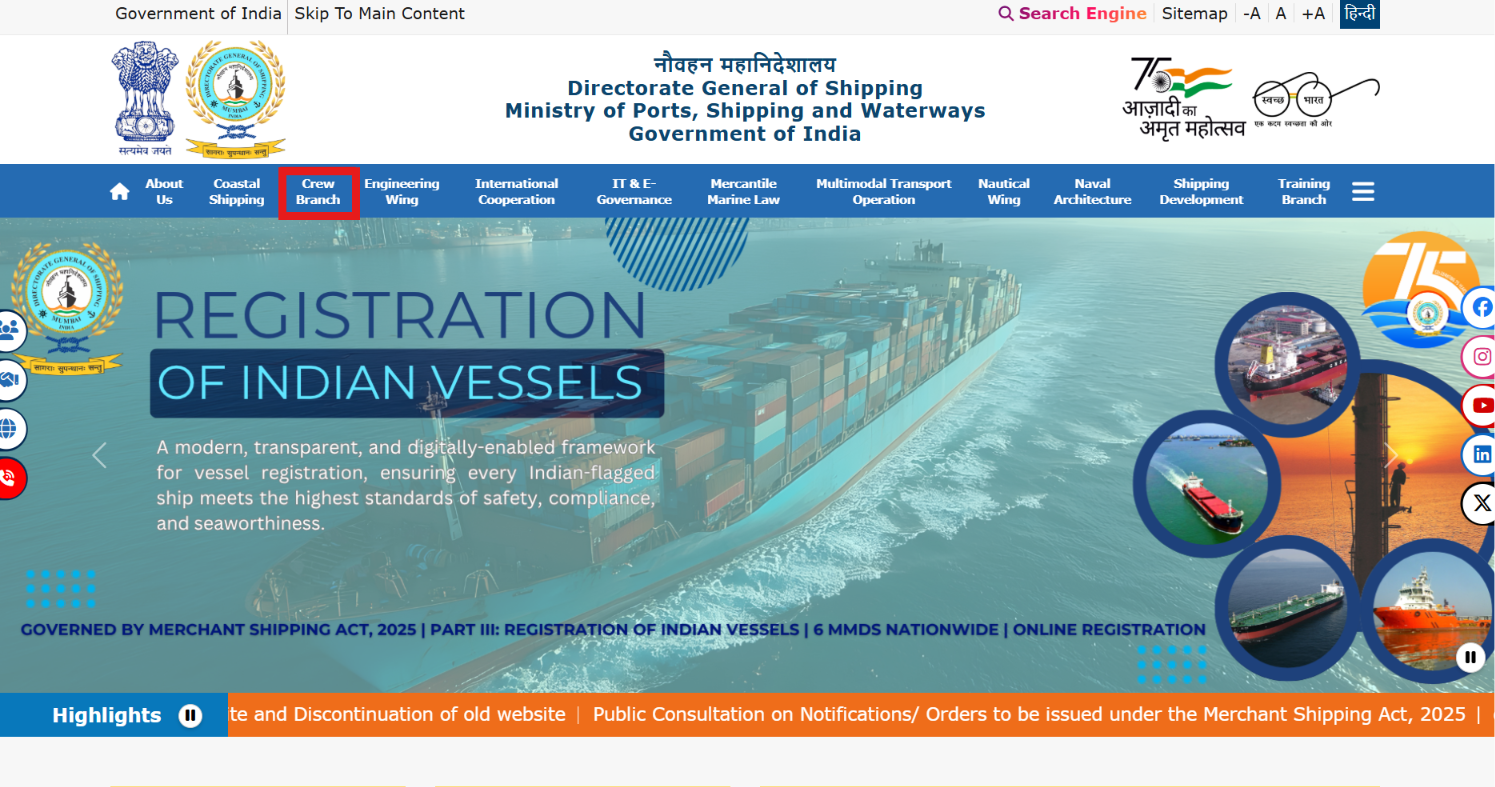
- Under Crew Branch, click on: List of Valid / Invalid / Temporarily Suspended RPSL
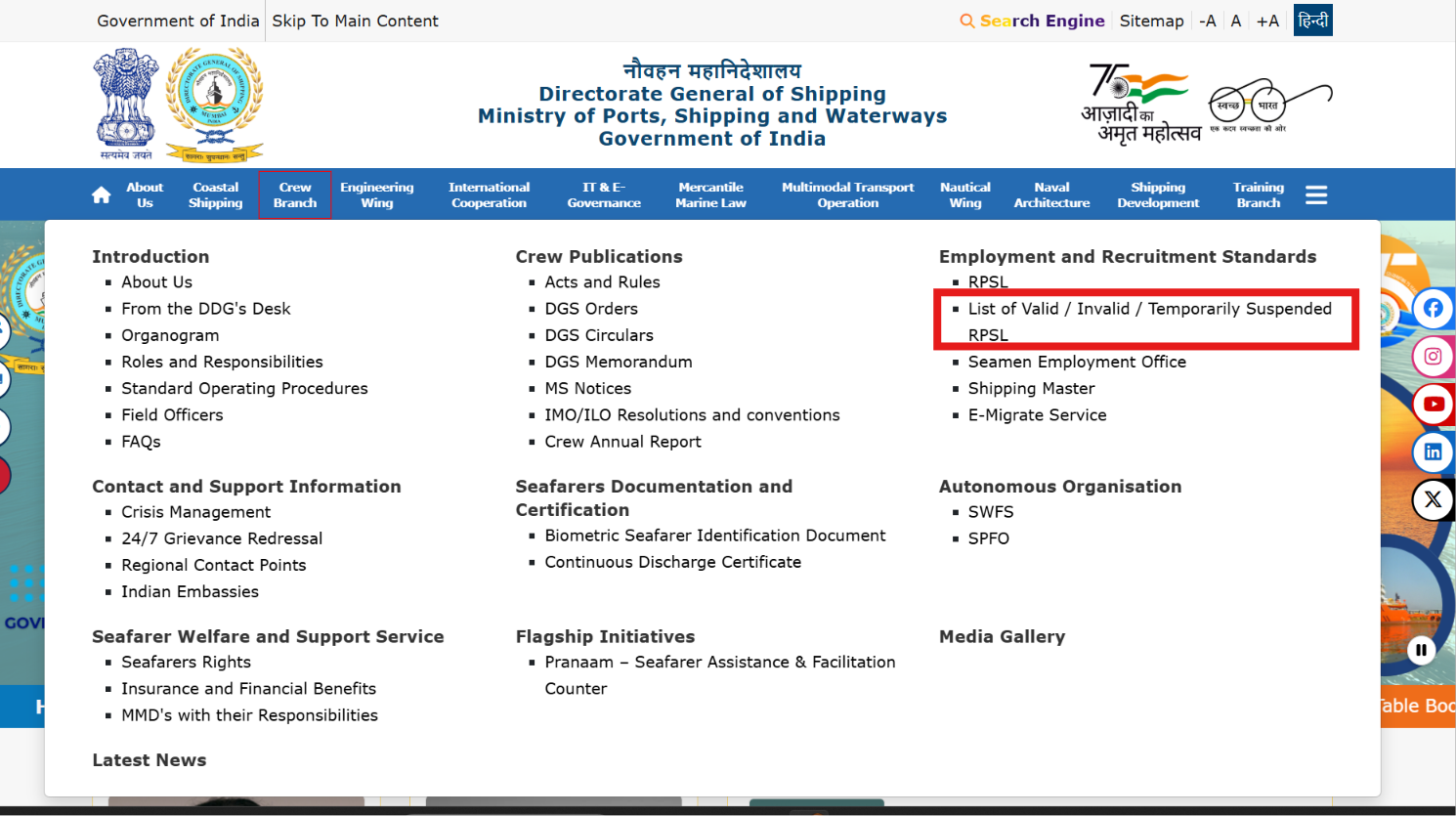
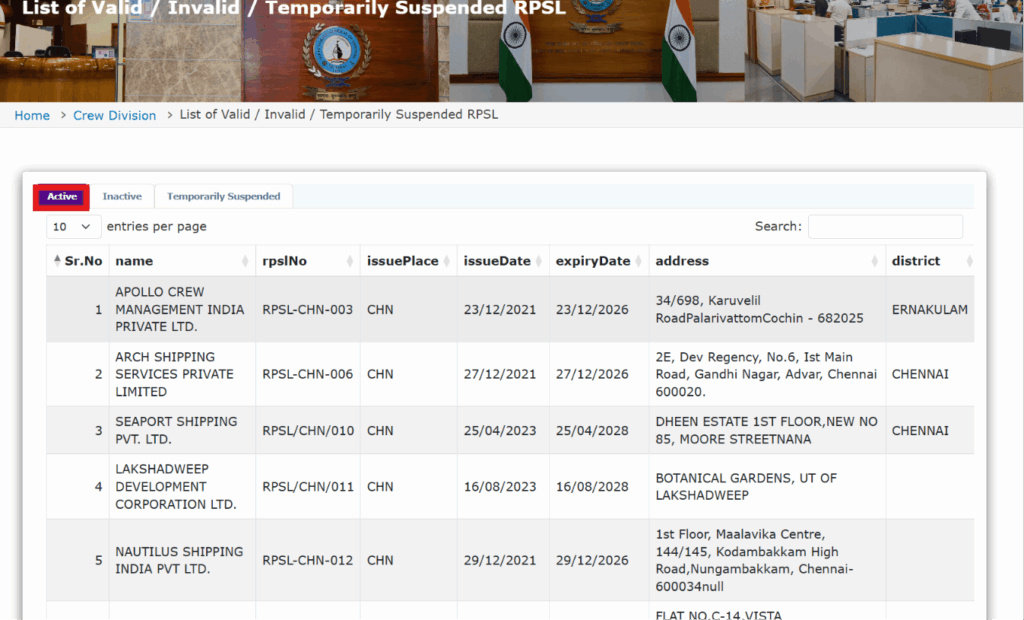
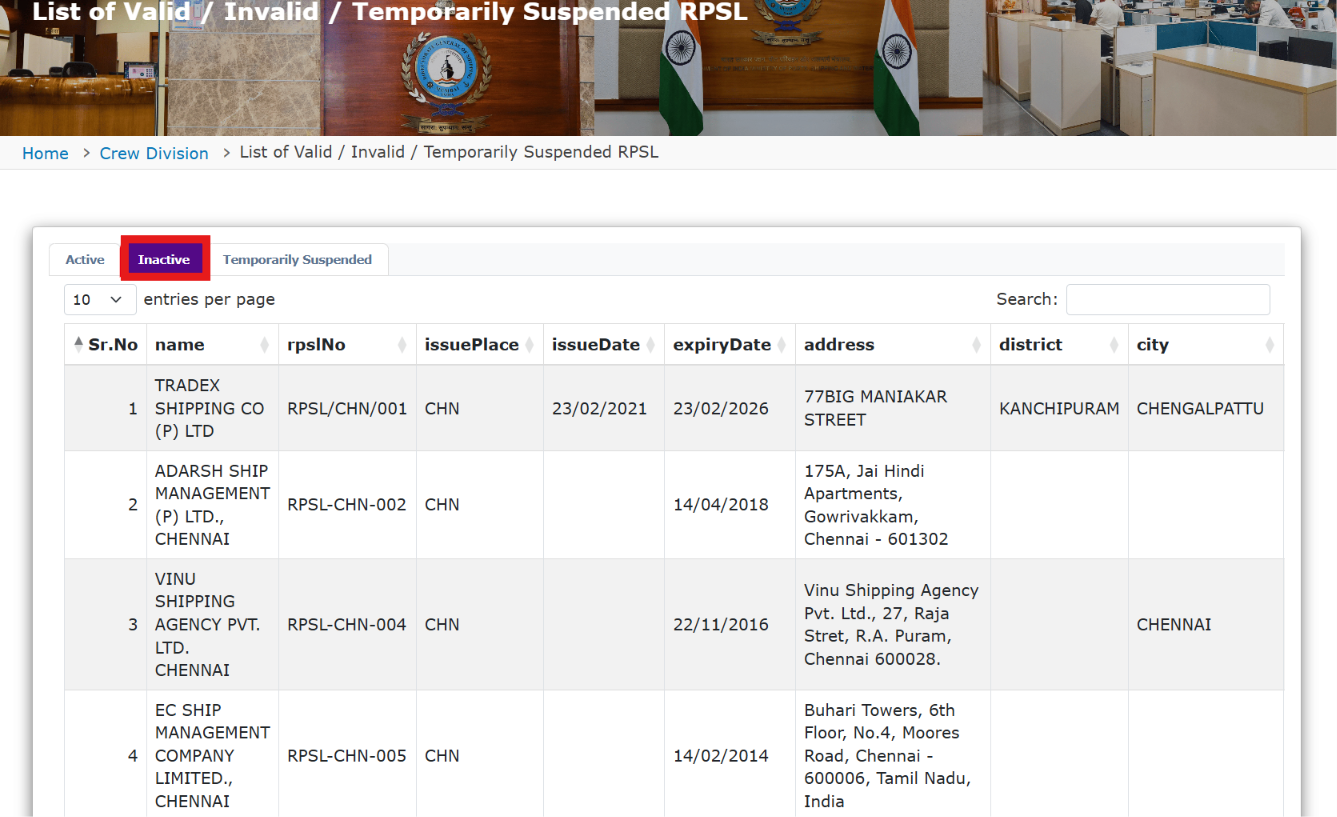
- After opening the page, you will see:
- List of Active RPSL Companies
- List of Inactive RPSL Companies
- List of Temporarily Suspended RPSL Companies
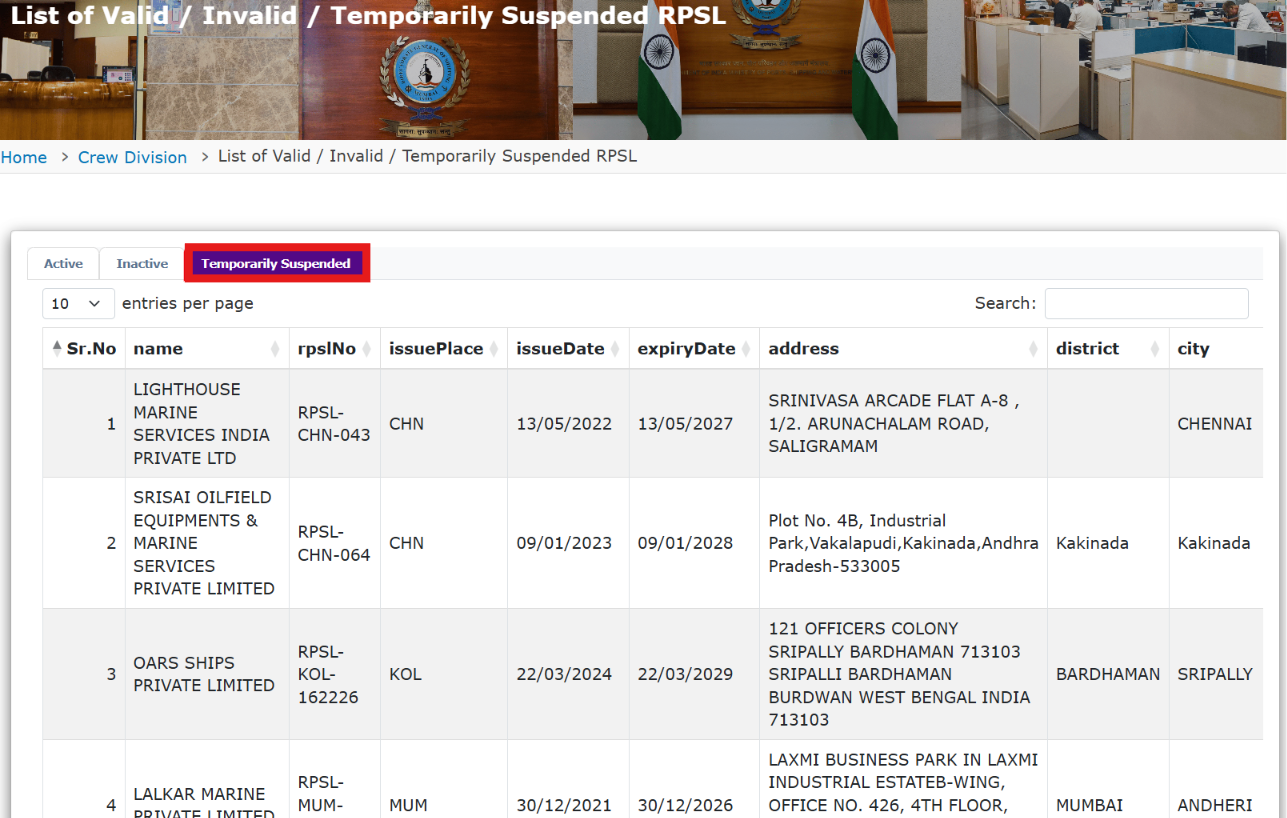
- Search for the company name carefully in these lists before proceeding with any recruitment process or payment.
If a company appears in the active RPSL list, it means the agency is authorised to recruit Indian Seafarers under DG Shipping regulations. If the company appears under the inactive or Temporarily Suspended RPSL categories, students should avoid dealing with that agency to prevent fraud, fake placements, or legal issues related to Merchant Navy recruitment.

Difference Between RPSL Agency and Maritime Training Institute
Many students get confused between the Maritime Training Institutes and RPSL organizations as both these organizations are linked with the shipping industry. But there is a huge difference between these two organisations.
The maritime training institutes provide pre-sea training, STCW training, and maritime studies approved by DG Shipping. The role of the RPSL organization is the recruitment and placement of seafarers on board.
The training institute can assist the students with placement, but they cannot recruit seafarers unless they have a valid RPSL license too.It is vital to know about this difference as many fake institutes lure students using placements.
Why RPSL Awareness is Important for GP Rating, Deck and Engine Cadet
The Freshers including GP Rating students and Deck Cadets are among the most easily duped victims of recruitment scams since they lack maritime experience and are desperate for their first ship.
There are numerous cases of students completing courses yet not knowing how maritime recruitment is done. They are concerned only with getting their certificates but not the process of proper recruitment.
Knowledge of RPSL licensing will enable the students to:
- Stay away from fraudulent placement agencies
- Understand the recruitment procedure
- Recognize genuine companies
- Guard themselves against fraud
- Make informed career choices
It is vital for making a successful career in the maritime industry.
Seafarers can access their profiles through their INDoS number and password. Using the portal, they can modify their personal data, upload documents, request changes, update passport data, and manage their maritime records.
This portal has become an integral element of digital maritime governance in India and is often accessed by Merchant Navy students, shipping companies, and maritime authorities.
Published by Aditya Kumar at MerchantNavyDecodedJobs.com — Your trusted guide to a career at sea.
Source: DG Shipping Casualty Investigation Report | Incident Date: 04 January 2023