
DGMA Issues Show Cause Notice to T.S. Chanakya Following Fatal Cadet Fall: Inquiry Findings & Regulatory Impact
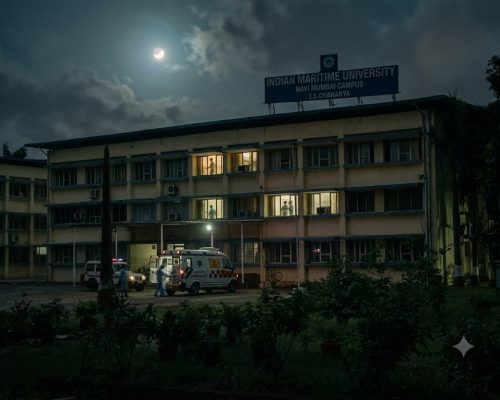
The Directorate General of Maritime Administration (DGMA), functioning under the Ministry of Ports, Shipping and Waterways, has served a formal Show Cause Notice to one of India’s premier maritime academies—T.S. Chanakya, Indian Maritime University (IMU) Navi Mumbai Campus (MTI No. 208053).
The regulatory action follows an in-depth fact-finding investigation into the tragic death of 19-year-old First-Year B.Sc. Nautical Science cadet, Somnath Singh Shivam, who suffered a fatal fall from a hostel building during the early morning hours of 28 May 2026.
The Official DGMA Show Cause Notice, supported by an inquiry report from the Mercantile Marine Department (MMD), Mumbai, highlights prima facie “major deficiencies” in campus security, hostel surveillance, and alcohol ban enforcement, warning of potential course suspension or withdrawal of approval.
1. What Happened on the Night of 27–28 May 2026?
According to the official MMD fact-finding inquiry, the sequence of events preceding the incident unfolded as follows:
- Evening Duties: On 27 May 2026, Cadet Somnath performed Quartermaster duties in the Warden’s Office until around 22:00 hrs before being relieved to prepare for examinations. His roommate reported that the cadet briefly stepped outside campus after dinner and returned at approximately 23:00 hrs.
- Late-Night Gathering: Between 01:30 hrs and 03:30 hrs on 28 May 2026, four cadets—including the deceased—convened in a hostel room for an informal farewell for a batchmate traveling home post-examinations. The inquiry noted that a bottle of whisky, procured from outside campus, was shared among them.
- Discovery of the Incident: At roughly 06:03 hrs, a cadet discovered Somnath lying severely injured at the rear of Hostel No. 2 and alerted the security guard.
- Medical Emergency Response: The duty warden arrived on the scene at 06:07 hrs. With no immediate municipal ambulance available, the cadet was moved in the institute’s emergency vehicle to D.Y. Patil Hospital. Despite emergency interventions, the cadet succumbed to severe head injuries and trauma.
Coverage by media outlets including The Free Press Journal and Ground News noted widespread student concerns regarding emergency coordination and security protocols in the days following the event.
2. Key Findings: Was Ragging or Foul Play Involved?
One of the central mandates of the MMD fact-finding committee was determining whether interpersonal violence or harassment contributed to the tragedy.
No Evidence of Ragging: Based on recorded depositions of ten witnesses, the inquiry found no evidence linking the occurrence to ragging, bullying, physical assault, or altercation.
Emotional State: Friends and roommates described the deceased cadet as academically driven, cheerful, and emotionally balanced, showing no signs of distress or intent to self-harm.
Circumstances of the Fall: No witnesses directly observed the fall. Police authorities indicated that the injuries were consistent with a fall from height, but exact circumstances remain subject to the conclusive police investigation and final post-mortem report.
3. Major Security and Supervisory Lapses Identified by MMD
While foul play was ruled out by the inquiry, the report surfaced critical institutional failures regarding safety infrastructure and administrative supervision:
A. Surveillance Blind Spots
The rear of Hostel No. 2, where the cadet was discovered, had no CCTV camera coverage. The absence of surveillance left movements at the back of the building completely unmonitored.
B. Unsecured Boundaries and Smuggling Routes
The inquiry confirmed that students could exit and re-enter campus through an unsecured hostel window and gaps in the perimeter boundary wall. The duty warden acknowledged prior knowledge that contraband, such as alcohol and cigarettes, had previously been brought in through a broken washroom window.
C. Known Fall Hazards Left Unaddressed
Cadets routinely climbed through hostel windows to access the terrace and roof—a dangerous practice that Somnath was known to have engaged in previously. Despite awareness of this behavior, no risk assessment had been documented, nor had preventive barriers or safety window grills been installed prior to the incident.
D. Unheeded 2024 Precedent
The inquiry noted that in 2024, another cadet sustained injuries after falling from a hostel window. Although that student survived, the administration failed to implement long-term structural safeguards to prevent recurrence.
4. The Regulatory Framework: Why DGS Order 07 of 2016 Matters
Maritime Training Institutes (MTIs) in India operate under strict guidelines overseen by the Directorate General of Shipping. In this notice, the DGMA cited multiple regulatory non-compliances:
Para 1.15 (Ban on Alcohol, Tobacco, and Drugs): Mandatory zero-tolerance policy. Any infringement is deemed serious institutional misconduct.
Para 3.2 (Round-the-Clock Supervision): Institutes must maintain designated supervisory personnel on campus at all times to safeguard candidate welfare, physical discipline, and campus security.
Paras 5.3.1 & 5.5 (Major Deficiencies): Significant operational lapses constitute major deficiencies, which carry statutory penalties including temporary or permanent revocation of course approval.
DGS Circular No. 23 of 2020: Quality Standards System (QSS) guidelines require continuous monitoring, internal audits, and root-cause corrective action.
The DGMA emphasized that these institutional deficiencies are being addressed in their own right as regulatory non-compliances, independent of the outcome of criminal investigations.
5. What DGMA Demands from T.S. Chanakya?
The institute has been directed to show cause within 15 days, providing documentation across 13 specific areas, including:
A comprehensive minute-by-minute log of the incident and emergency response dispatches.
A complete CCTV mapping plan detailing camera positions, blind spots, and footage retention policies.
Security rosters, night attendance sheets, and patrol registers for 27–28 May 2026.
An audit of broken windows, boundary gaps, and roof-access points, alongside repair logs.
Full records, risk assessments, and action plans concerning the 2024 window fall incident.
A point-by-point Action Taken Report (ATR) on all ten safety recommendations made by the MMD.
Explicit assurances and protections against retaliation or intimidation for cadets and staff participating in the inquiry.
Frequently Asked Questions (FAQs)
What is the DGMA show cause notice to T.S. Chanakya about?
The Directorate General of Maritime Administration issued a show cause notice regarding major administrative and infrastructural lapses—including unmonitored blind spots, alcohol ban violations, and lack of window fall protections—identified following the death of Cadet Somnath Singh Shivam in May 2026.
Did the inquiry find evidence of ragging at T.S. Chanakya?
No. The Mercantile Marine Department (MMD) fact-finding report explicitly stated that witness testimonies and records showed no evidence of ragging, harassment, or physical altercation preceding the fall.
What penalties could T.S. Chanakya face?
Under Paras 5.5.2 to 5.5.5 of DGS Order No. 07 of 2016, failure to rectify major deficiencies or provide an adequate response can lead to the temporary suspension or permanent withdrawal of approval for maritime training courses.
